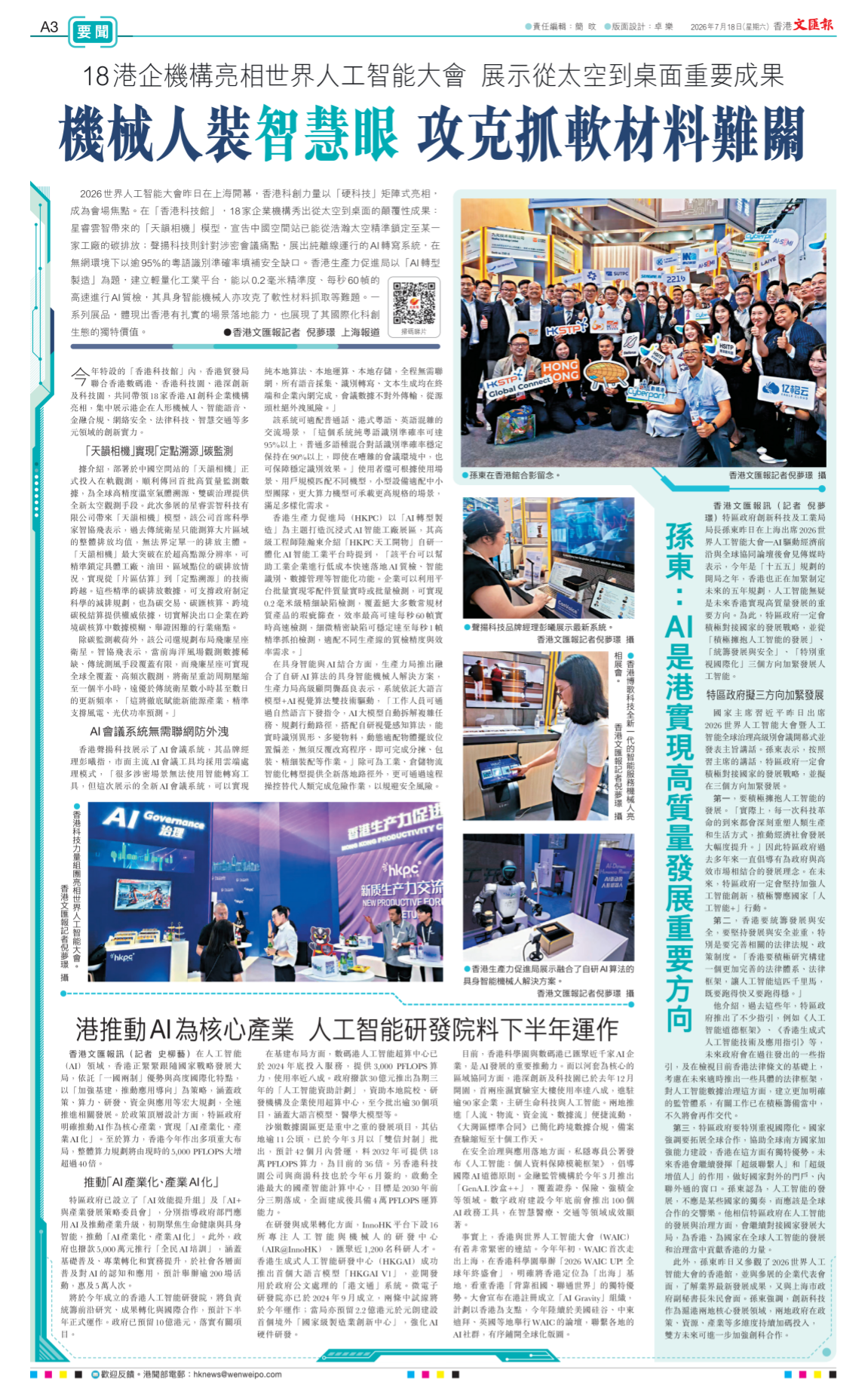
Company News | Stellerus Showcases Hong Kong’s AI Climate Tech Innovation Strength at WAIC 2026
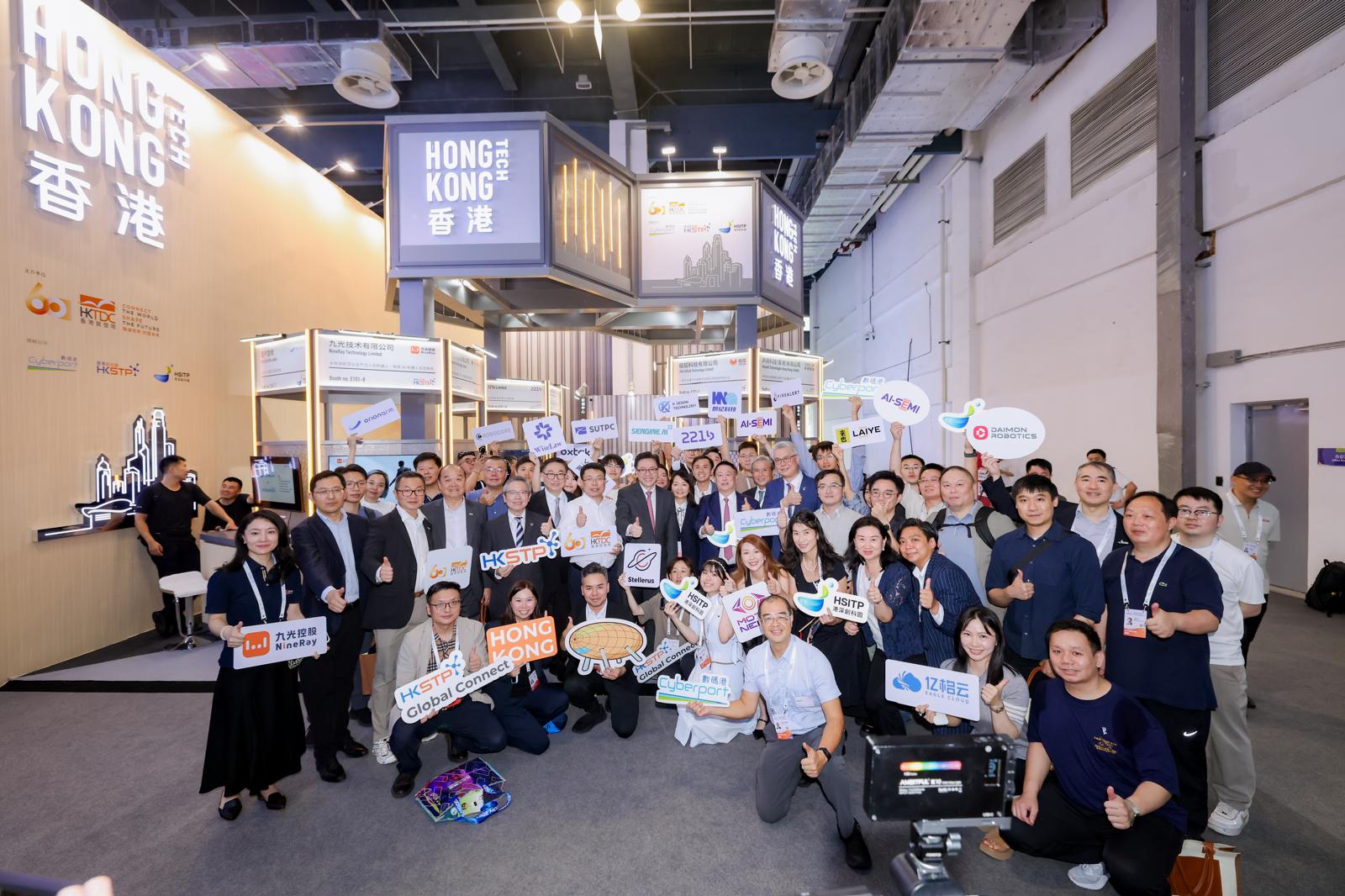 Professor Sun Dong, Secretary for Innovation, Technology and Industry of the HKSAR Government, visited the Hong Kong Pavilion and met with representatives of participating enterprises to learn about the industry's latest development achievements.
President Xi Jinping pointed out in his keynote speech at the opening ceremony of the 2026 World Artificial Intelligence Conference & High-Level Meeting on Global AI Governance that, to further support global AI development and advance global AI capacity building, China will promote the deployment and application of the "Mazu" AI meteorological early warning solution in 30 countries over the next five years.
This important deployment highlights the strategic significance of artificial intelligence in meteorological early warning, disaster prevention and mitigation, and responding to climate change. It also highly aligns with Stellerus’ long-term dedicated development direction in AI meteorology, satellite remote sensing, and climate tech. The company will continuously drive technological innovation in space-air-ground integrated sensing and physics-guided AI to provide more precise and efficient tech solutions for global intelligent meteorology and climate governance.
From July 17 to 20, the annual flagship event in the global AI field — the 2026 World Artificial Intelligence Conference (WAIC) & High-Level Meeting on Global AI Governance was held in Shanghai. As a tech enterprise co-incubated by Hong Kong Science and Technology Parks (HKSTP) and The Hong Kong University of Science and Technology, Stellerus debuted at the "Hong Kong Pavilion" jointly built by the Hong Kong Trade Development Council, HKSTP Corporation, Cyberport, and the Hong Kong-Shenzhen Innovation and Technology Park. The company demonstrated Hong Kong's innovation achievements in AI, space technology, and climate tech to the world, engaging in deep exchanges with industry partners, investment institutions, and scientific experts from around the globe to jointly explore new opportunities of AI empowering global sustainable development.
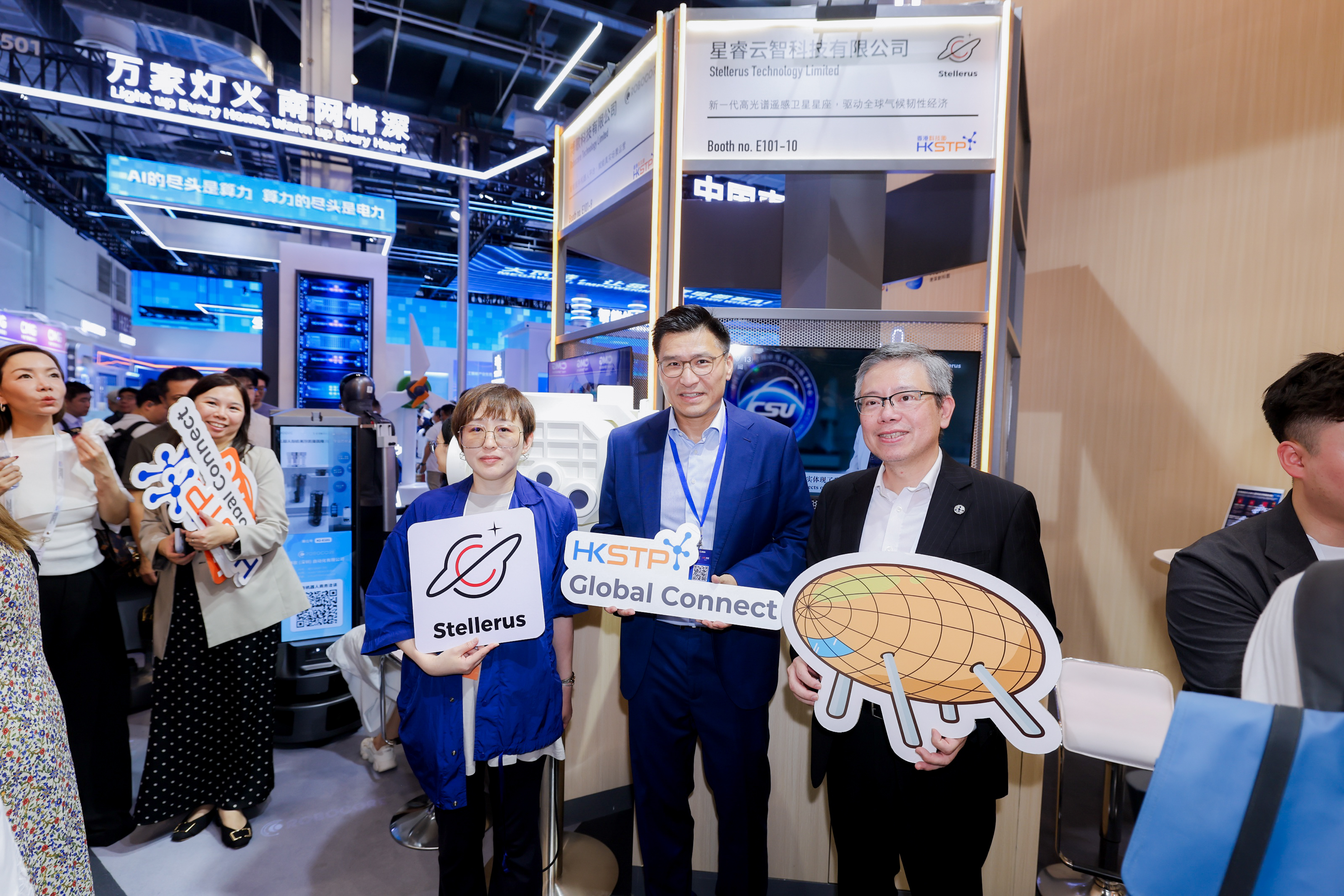 Legislative Council Member Duncan Chiu and CEO of Hong Kong Science Park Albert Wong visited the Stellerus Tech booth to learn about AI climate tech innovations and industrial applications.
Since its inception, the World Artificial Intelligence Conference has gathered over 8,100 top scientists, entrepreneurs, investors, and industry leaders from across the globe, becoming a major platform for driving AI tech innovation, industrial collaboration, and global governance. Under the theme "Governing AI for Good and for All," this year's conference brought together over 1,100 enterprises and exhibited more than 3,000 innovative products, attracting immense global industry attention.
As an innovative AI meteorology enterprise from Hong Kong, Stellerus highlighted the "MUSICO" model and the "Feilian Constellation", fully presenting its latest technological achievements in space-air-ground integrated sensing, satellite remote sensing, AI meteorology, and carbon monitoring.
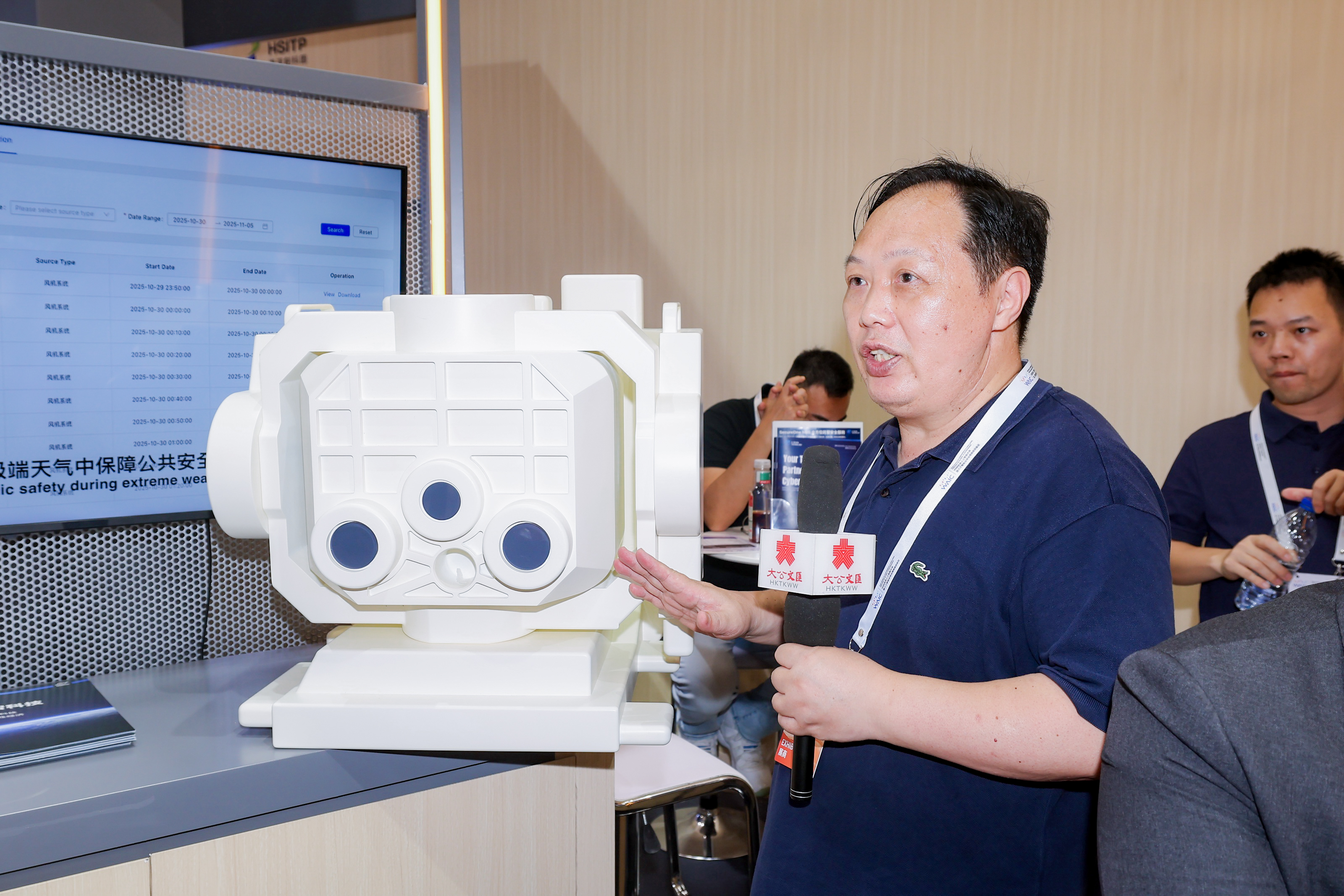 Professor Zhixiefei introducing "MUSICO" to the media.
Among them, "MUSICO", as an important carbon monitoring payload deployed on the China Space Station, officially entered on-orbit observation and successfully transmitted its first batch of high-quality monitoring data back to Earth, breaking through the limitations of traditional satellites that can only estimate large-scale average emissions. The company's Chief Scientist Zhixiefei stated that in the past, traditional satellites could only calculate the overall emission average of large areas without identifying individual emitters. In contrast, "MUSICO" possesses ultra-high point-source resolution capabilities, accurately identifying greenhouse gas emissions from factories, oil fields, and other major point sources, achieving a transition from "area estimation" to "point-source tracing." Relevant technologies can provide higher-precision and more credible data support for government carbon reduction policymaking, carbon trading markets, carbon sink accounting, and cross-border carbon accounting, helping build a global carbon management framework.
In addition, Stellerus also showcased the planned "Feilian Constellation." Professor Zhixiefei said that current ocean wind field observation data is scarce, and traditional wind measurement methods have limited coverage. The "Feilian Constellation" can achieve full global coverage and high-frequency observations, compressing the satellite revisit period to 1.5 hours—far superior to the updating frequency of traditional satellites, which takes several hours or even days. "This will completely empower the new energy industry, accurately supporting wind power and photovoltaic power forecasting."
During the exhibition, the Stellerus booth attracted numerous government representatives, research institutions, enterprise clients, and investment organizations for visits and exchanges. Focusing on application scenarios such as AI meteorology, carbon monitoring, satellite remote sensing, and smart cities, the company team conducted in-depth discussions with overseas and domestic partners, further expanding global collaboration opportunities.
Looking ahead, Stellerus will continue to rely on the advantages of Hong Kong's international scientific research and innovation platform to deepen the integrated development of AI, space tech, and climate tech. It will continuously drive innovation in space-air-ground integrated sensing and physics-guided AI technologies, working hand-in-hand with global partners to address climate change challenges through technology, contributing Hong Kong's innovative strength to smart city construction, energy transition, and global sustainable development.