Policy Insights | Seizing Opportunities in Hong Kong’s Five-Year Plan: Stellerus Advances Its I&T Development Blueprint
On September 16, Chief Executive John Lee Ka-Chiu delivered the First Five-Year Plan for Economic and Social Development of the Hong Kong Special Administrative Region (2026–2030) at the Legislative Council, accompanied by the release of the 2026 Policy Address.
Hong Kong’s Five-Year Plan serves as a forward-looking, strategic, and directional framework that proactively aligns with the national 15th Five-Year Plan to map out the SAR's economic and social trajectory. The Policy Address outlines annual policy priorities and concrete implementation measures. Together, they form an integrated roadmap for Hong Kong’s future development.
Chief Executive John Lee noted that this year’s Policy Address carries special significance as the first delivered following the publication of the Five-Year Plan. The overarching theme—"Planning for the Long Term, Reform for New Beginnings, Fostering Growth, and Enhancing Livelihoods"—reflects the core vision behind its formulation.
The emphasis placed by both documents on commercial space, the low-altitude economy, AI-driven urban management, extreme weather early warnings, and climate-resilient infrastructure closely aligns with Stellerus’ core technologies and strategic growth direction.
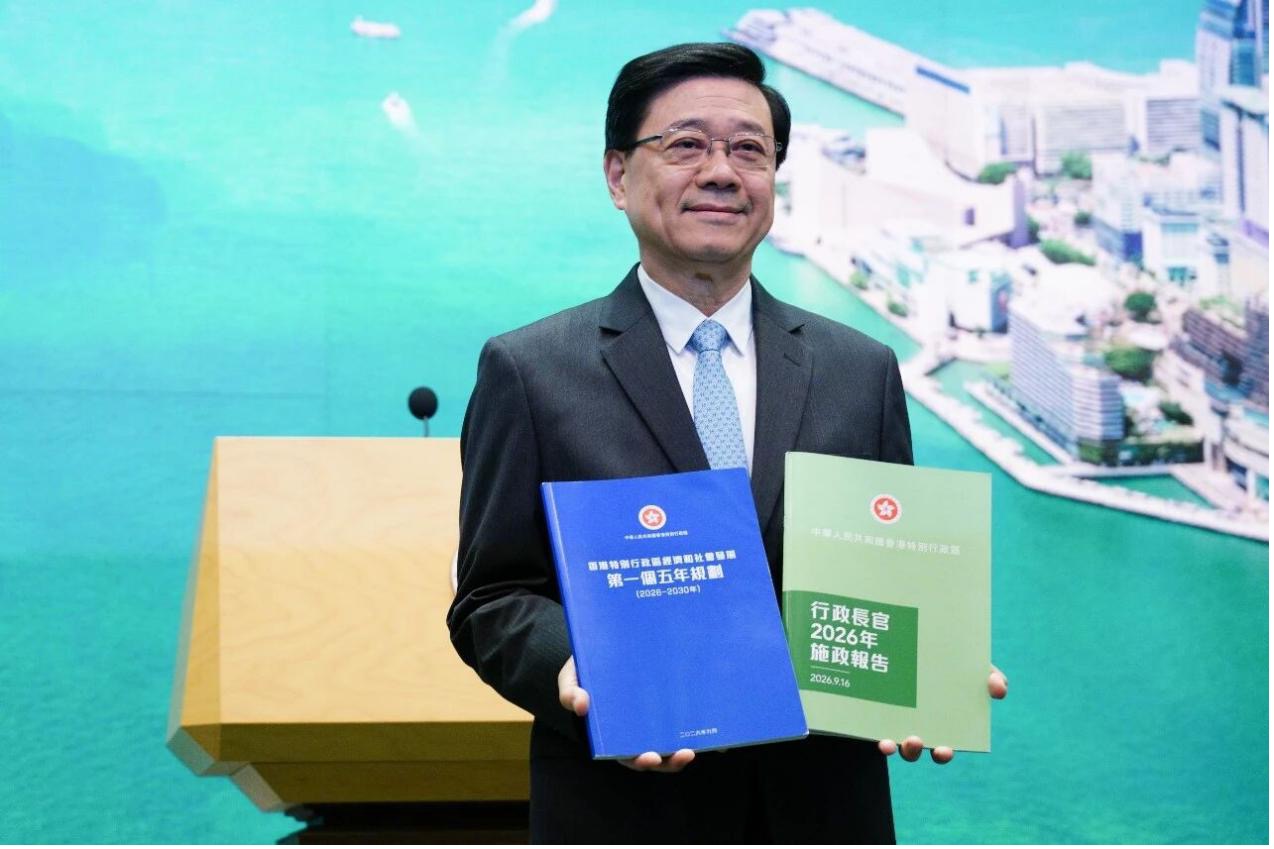 (Image: John Lee presents Hong Kong's first Five-Year Plan and 2026 Policy Address)
Empowering the Low-Altitude Economy: Building Precision Meteorological and Safety Support Capabilities
Hong Kong’s inaugural Five-Year Plan and 2026 Policy Address set out comprehensive deployments for the low-altitude economy.
The Policy Address states that the government will formulate an "Action Plan for Low-Altitude Economy Development," advance research on low-altitude infrastructure technologies, and progressively build an intelligent low-altitude traffic management system. This will be supported by enhanced meteorological observations, 3D spatial data, monitoring, and enforcement systems, targeting phased implementation starting in 2028.
Low-altitude flights operate at low altitudes in concentrated areas, making them particularly vulnerable to sudden strong winds, low clouds, low visibility, turbulence, and severe convective weather. This demands faster and far more granular meteorological services than conventional weather forecasting. Stellerus integrates satellite remote sensing, ground-based observations, numerical weather prediction, and Physics-Informed AI to provide precise risk forecasts for wind fields, precipitation, visibility, and severe convection along flight routes.
The Five-Year Plan dedicates a specific chapter to fostering the low-altitude economy, proposing to build a low-altitude ecosystem and introduce an enhanced "Regulatory Sandbox X." This platform will test complex application scenarios—including cross-boundary routes, low-altitude passenger aircraft, drone traffic management systems, and multi-scenario, multi-user shared platforms—while fostering cross-boundary low-altitude logistics collaboration across the Greater Bay Area (GBA).
In an interview with China Daily, Prof. Hui Su, Chair Professor of Civil and Environmental Engineering at HKUST and Founder & Chairwoman of Stellerus, highlighted that the low-altitude economy will not only drive economic growth but also serve as a key pillar of smart urban management. She noted that the Five-Year Plan’s approach—transitioning mature sandbox projects into routine operations based on initial trial experiences and progressively establishing industry standards—demonstrates a pragmatic, steady, and step-by-step strategy.
Moving forward, Stellerus will leverage its technical strengths in satellite remote sensing, microscale weather forecasting, and Physics-Informed AI to actively contribute to low-altitude weather assurance and traffic management systems. By partnering with government bodies, research institutes, and industry leaders in technology testing, demonstration applications, and standard-setting, Stellerus aims to deliver precise, timely, and reliable risk mitigation for passenger flights, drone operations, and cross-boundary logistics—helping Hong Kong build a safe, efficient, and scalable low-altitude ecosystem.
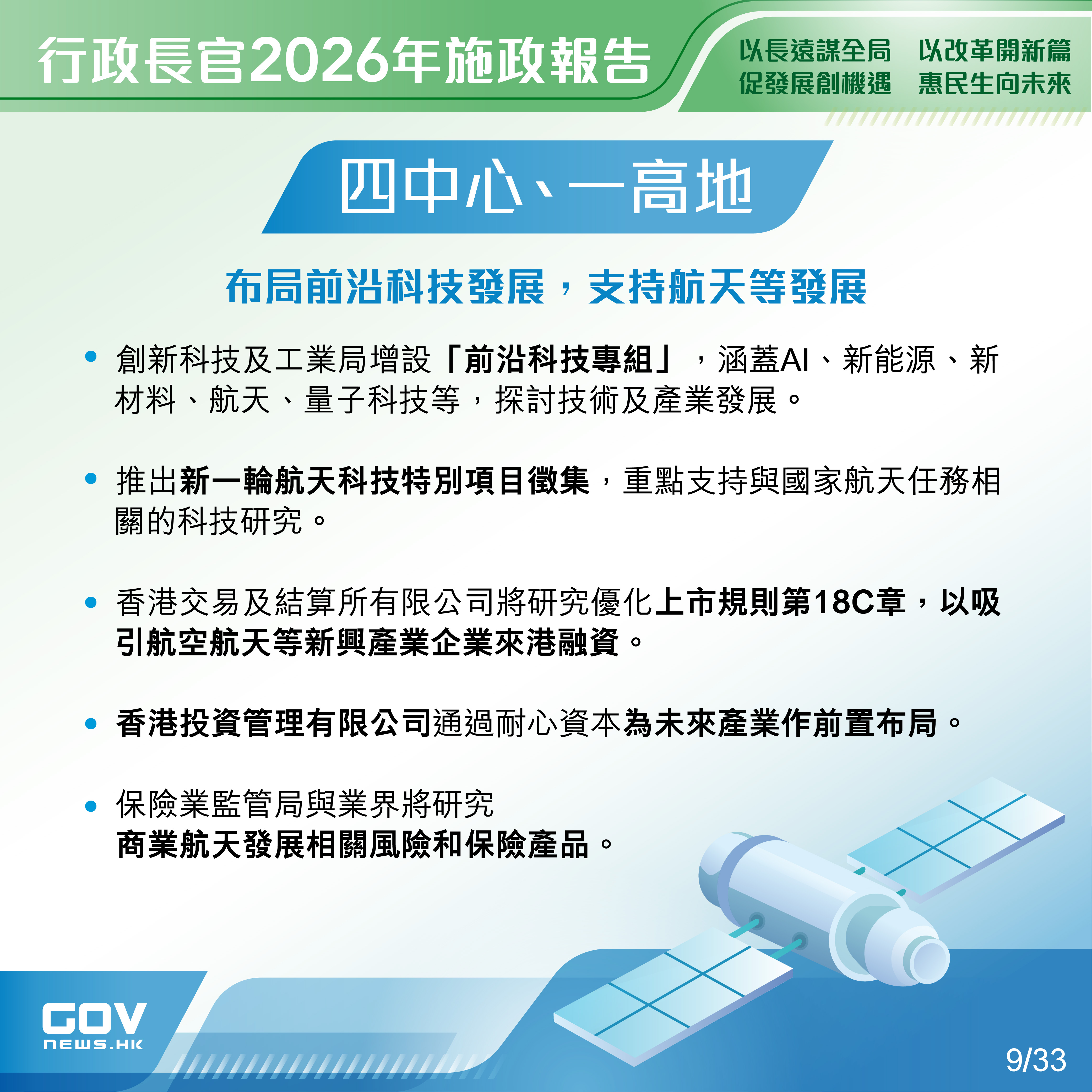
Capturing Space Policy Opportunities: Commercializing Aerospace Tech in Hong Kong
Hong Kong’s established common law system, international business environment, and robust strengths in finance, insurance, professional services, and R&D talent position it as a vital gateway connecting Mainland commercial space enterprises with global markets.
The Policy Address announces a new round of special calls for space science and technology projects, prioritizing research aligned with national space missions in satellite and remote sensing technologies. Measures also include streamlining LEO satellite licensing, assisting enterprises with international orbit and frequency coordination, and exploring optimizations to Chapter 18C of HKEX Listing Rules to broaden financing channels for emerging sectors like aerospace. Additionally, the Insurance Authority and industry partners will study systemic risks in commercial space and propose tailored insurance products. These initiatives provide strong policy support for Stellerus as we advance our Feilian Constellation, payload R&D, and satellite data commercialization.
Stellerus is currently building the "Feilian Constellation"—a next-generation, cost-effective hyperspectral remote sensing satellite constellation. Streamlined LEO satellite approvals and orbit coordination will shorten deployment cycles and accelerate constellation construction. Furthermore, capital market enhancements offer a clear roadmap for connecting with public markets and securing long-term R&D funding. Aerospace insurance products will provide vital risk coverage across satellite manufacturing, launch, and on-orbit operations, mitigating project uncertainties and driving the industrialization of space technology.
Relying on Hong Kong’s unique advantages in innovation, capital markets, legal services, risk protection, and global connectivity, Stellerus will accelerate the Feilian Constellation's development and core tech implementation, unlocking the commercial value of satellite data to deliver globally competitive space products and services.
Advancing Green Tech: Establishing Verifiable Carbon Monitoring Capabilities
The Policy Address proposes establishing a "Low-Carbon Green Research Fund" to support Hong Kong research institutions and enterprises in conducting R&D across Hong Kong and Mainland China, driving the commercialization of low-carbon technologies and helping green tech expand overseas.
This policy direction directly aligns with Stellerus’ greenhouse gas remote sensing and carbon management business. Powered by our "MUSICO" (Multi-Spectral Imaging Carbon Observatory) payload and its high-precision detection capabilities for CO2 and CH4 emissions, Stellerus provides objective, space-verified data for emission source identification, methane leak detection, carbon verification, carbon asset management, and green finance.
This technology applies across power plants, oil & gas facilities, landfills, industrial parks, and agriculture, offering verifiable data for corporate carbon accounting, leak identification, mitigation assessment, carbon trading, and ESG finance.
Stellerus will actively participate in low-carbon R&D and demonstration projects, pioneering an innovative model where satellite data backs carbon accounting, disclosure, and finance, while expanding these solutions across the GBA, Belt and Road countries, and global markets.
Deepening Meteorological Science Cooperation: Elevating GBA High-Precision Forecasting
The Five-Year Plan proposes advancing high-precision weather forecasting model research and building a GBA meteorological data platform within the Hong Kong Park of the Hetao Shenzhen-Hong Kong Science and Technology Innovation Cooperation Zone to facilitate cross-boundary data sharing and collaborative research.
The densely populated GBA features highly concentrated infrastructure exposed to multi-hazard climate risks, including typhoons, heavy rain, urban flooding, landslides, and extreme heat. Traditional forecasting models still have room for improvement regarding localized severe convection, complex terrain precipitation, and compound hazard chains. Developing higher-precision, hyper-local, and timely forecasting capabilities is paramount.
Stellerus will fully leverage its expertise in satellite remote sensing, numerical weather prediction, multi-source data fusion, and AI to contribute to the GBA meteorological platform and cross-boundary early warning networks—delivering tailored weather forecasting and risk management across transport, energy, low-altitude aviation, and urban operations.
Empowering Disaster Mitigation via Tech: Building a Resilient Hong Kong
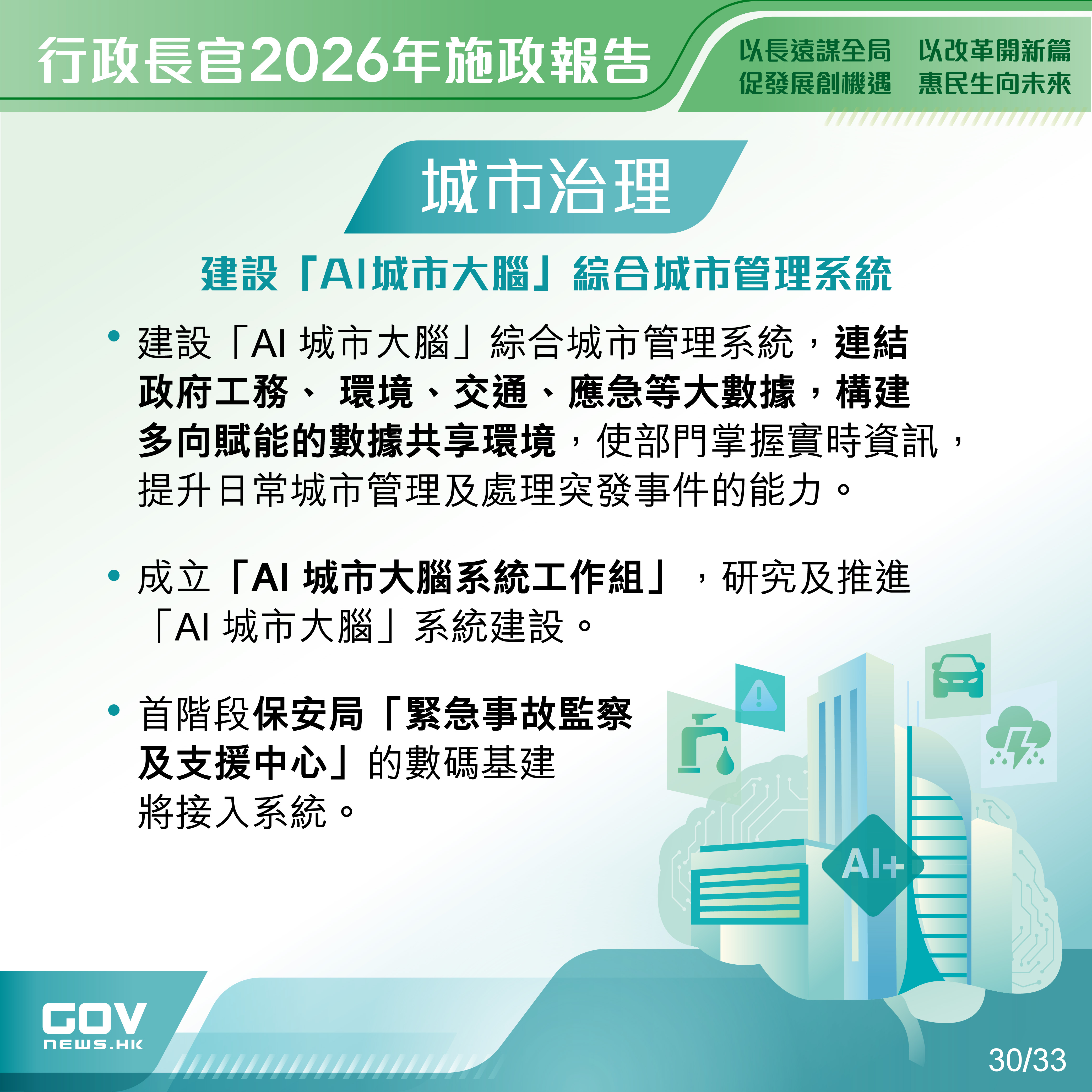
The government proposed building an "AI City Brain" integrated management system to strengthen disaster prevention, mitigation, and relief capabilities. By utilizing AI, Big Data, and IoT, the system will drive cross-departmental data sharing and smart analysis to achieve real-time sensing, risk warnings, immediate forecasting, and coordinated emergency responses.
The Five-Year Plan also highlights utilizing satellite remote sensing, phased-array radar, comprehensive 3D marine-land monitoring networks, and AI to enhance rapid assessment and information dissemination during severe weather and natural disasters. Additionally, a smart flood forecasting and warning system will integrate real-time hydrological, rainfall, and tidal data to simulate various flooding scenarios.
Stellerus has developed a Digital Twin Smart Landslide Risk Management Platform. Combining physics-based simulations, smart sensing, integrated communications, and a digital twin engine, the platform pioneers city-scale, real-time landslide risk assessments. It effectively simulates traffic and evacuation responses during disasters to support emergency decision-making and advance Hong Kong’s "Smart Disaster Mitigation."
This platform can also expand to manage risks from earthquakes, floods, and typhoons, strengthening disaster resilience in landslide-prone areas globally, pioneering a new domain in digital emergency management science, and driving cities toward smarter, sustainable, and resilient futures.
Moving in Lockstep with Hong Kong: Co-creating a Smart and Resilient Future
Hong Kong’s inaugural Five-Year Plan and 2026 Policy Address not only map out clear policy pathways for commercial space, AI, and green tech, but also create concrete, sustainable application scenarios.
From low-altitude meteorological support and satellite payload/constellation development to GBA precision weather forecasting, urban disaster warnings, and greenhouse gas monitoring, the key priorities directly resonate with Stellerus’ technological capabilities and strategic roadmap. This alignment validates our forward-looking research while clarifying our path toward industrialization.
Looking ahead, Stellerus will remain rooted in Hong Kong, connected to the Mainland, and oriented toward the globe. We will actively engage in joint projects with government bodies, research institutes, and industry partners to push space remote sensing, AI meteorology, and urban risk management toward large-scale real-world deployment—contributing to Hong Kong’s development as an international I&T hub, smart city, and climate-resilient metropolis.
Policy Address Portal: www.policyaddress.gov.hk
Five-Year Plan Portal: www.hk5yplan.gov.hk
China Daily Coverage: https://bit.ly/46sPYiM
Photo Credit: Dot Dot News / Photo by Mak Kwan-kit