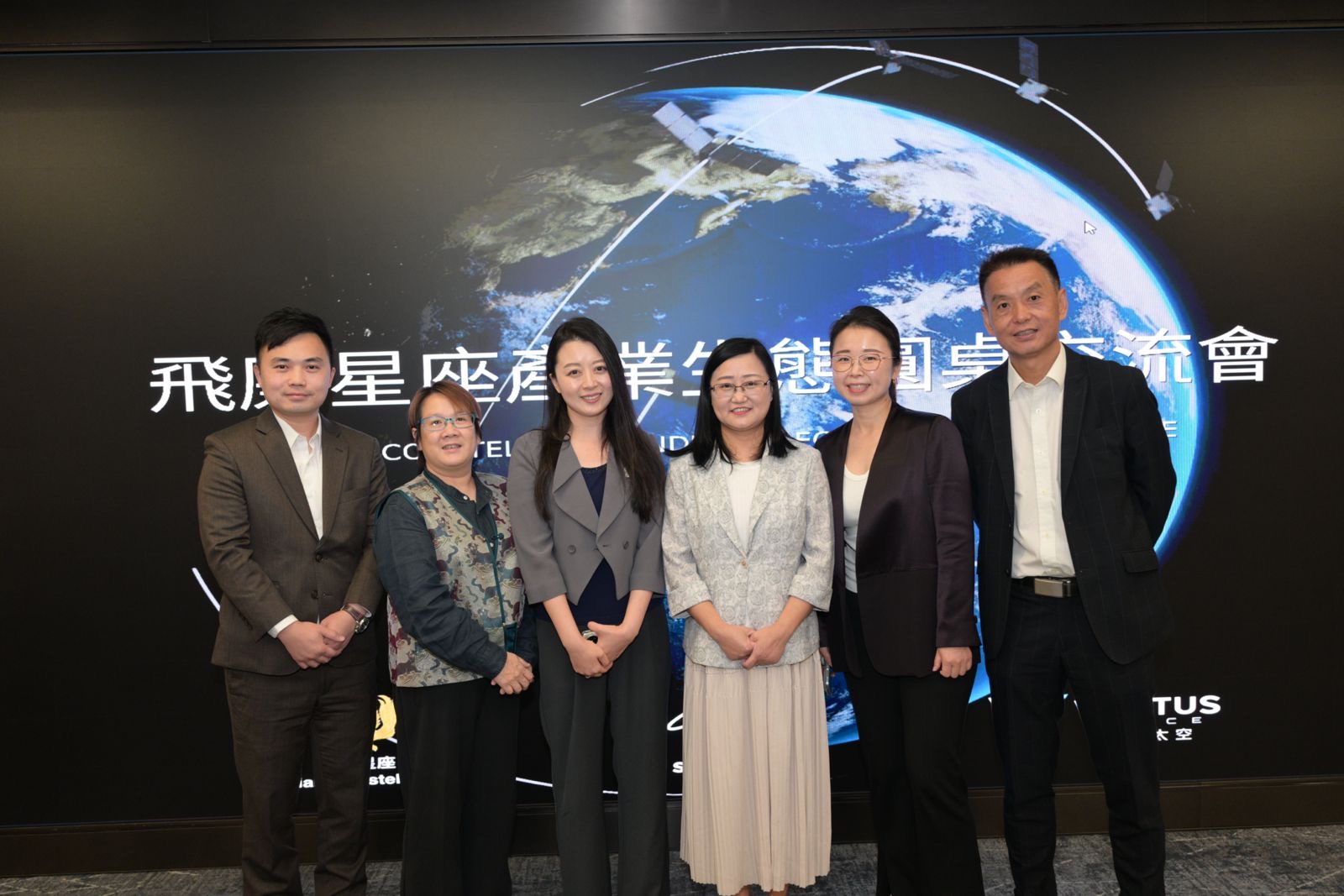
Frontier Dialogue | Feilian Constellation Industrial Ecosystem Roundtable Exchange Held to Jointly Explore New Opportunities in Constellation Construction and Industrial Applications
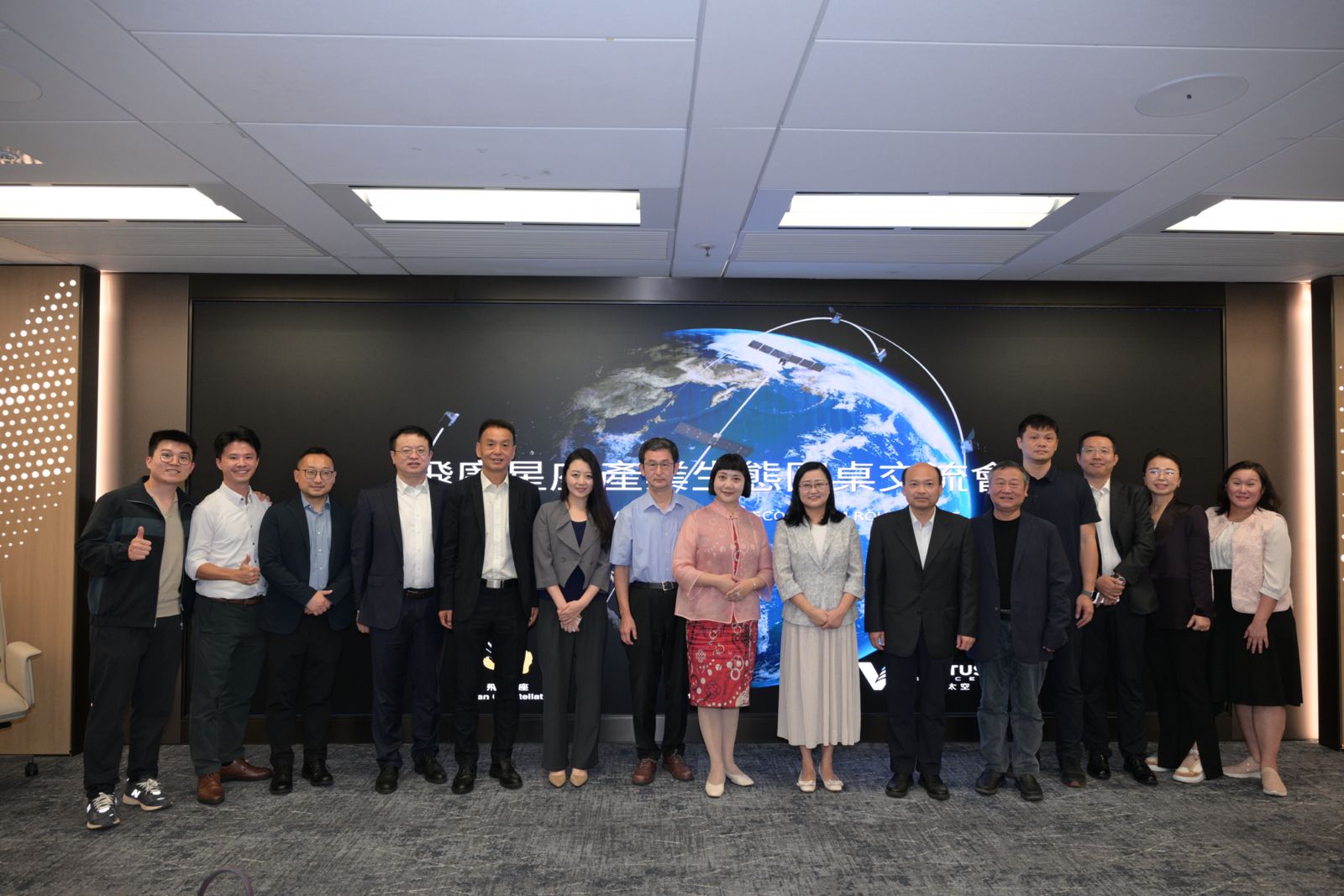
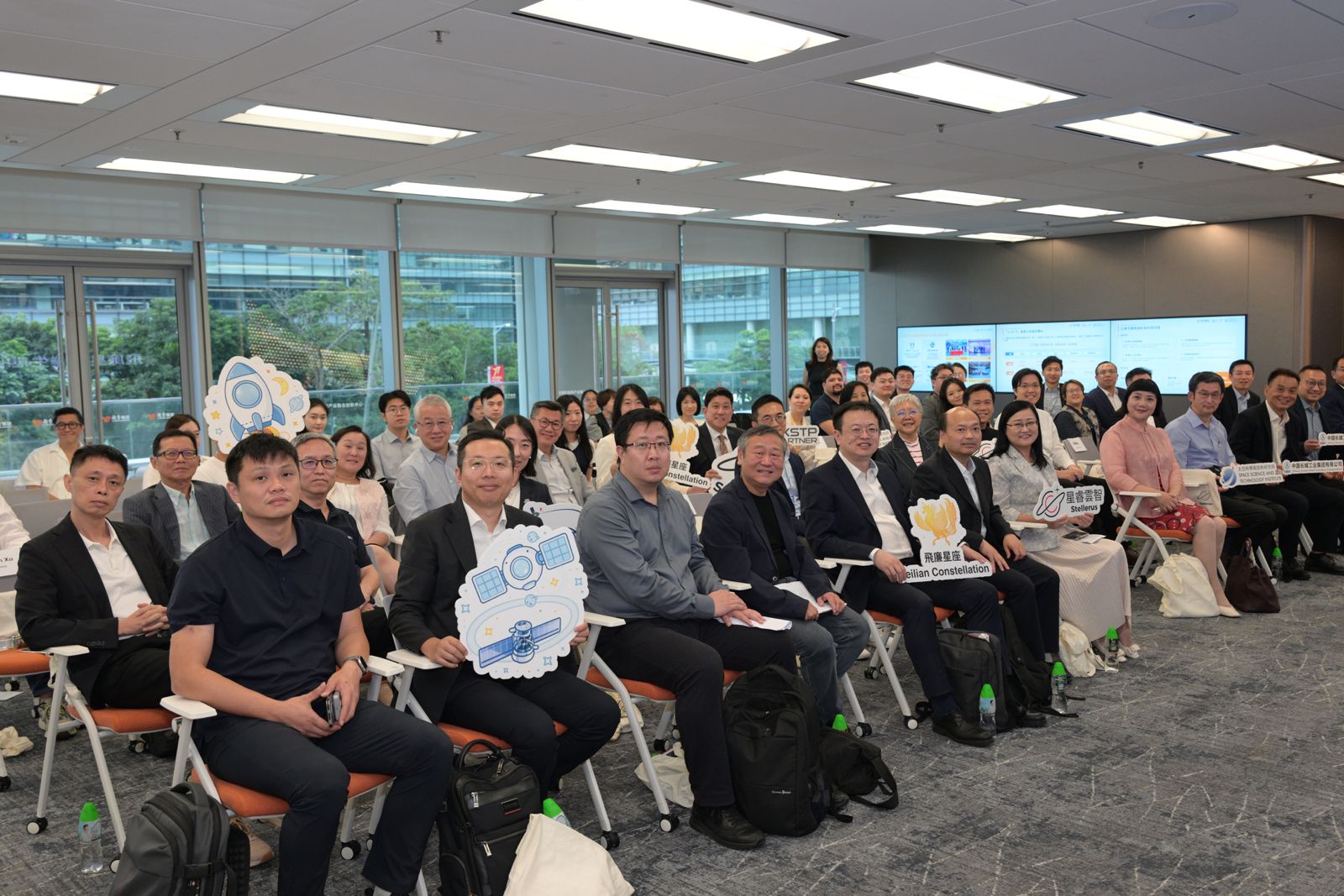
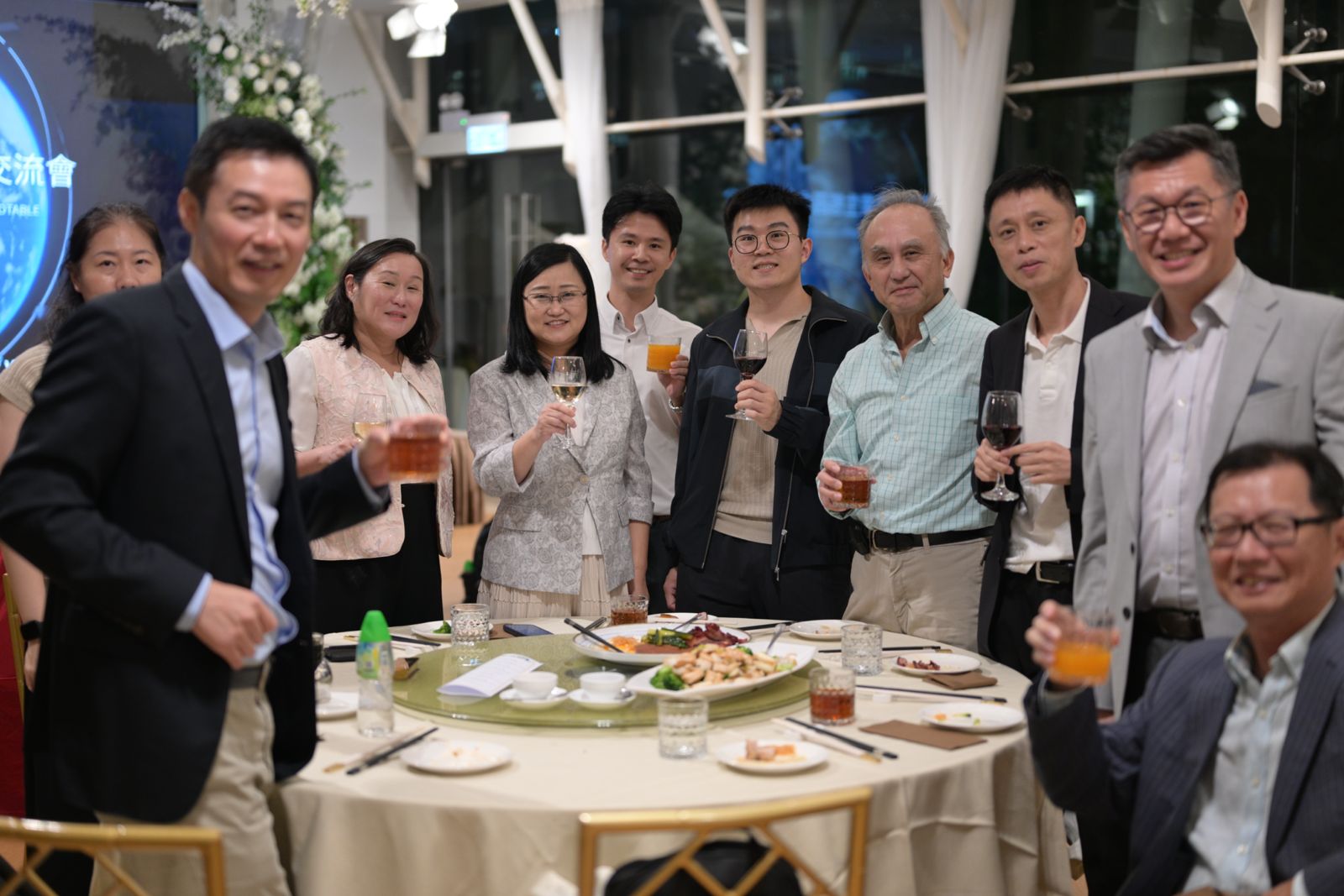
On October 28, 2026, the "Feilian Constellation Industrial Ecosystem Roundtable Exchange," hosted by AstroCloud AI and WindStart Space, and supported by the Guangzhou-Hong Kong Science and Technology and Industry Integration Innovation Center, was held at the Hong Kong Science Park · Guangzhou-Hong Kong Science and Technology and Industry Integration Innovation Center. This exchange gathered ecological partners of the "Feilian Constellation" across satellite platforms, payload development, industrial applications, and investment to build industrial cooperation ties and explore pathways for the Mainland and Hong Kong to synergistically promote the development of commercial aerospace and the space economy, centering on the constellation's technical routes, product systems, and development vision.
The meeting revolved around directions including global 3D wind field observation, commercial meteorological services, space AI, and Physical AI. It highlighted exchanges on the applications of the "Feilian Constellation" in new energy, disaster prevention and mitigation, transportation, carbon monitoring, and urban infrastructure management, as well as collaborative opportunities among satellite manufacturing, communication transmission, computing power,data, and industry services.
I. Welcome Remarks
◆ Speech by Prof. Hui Su
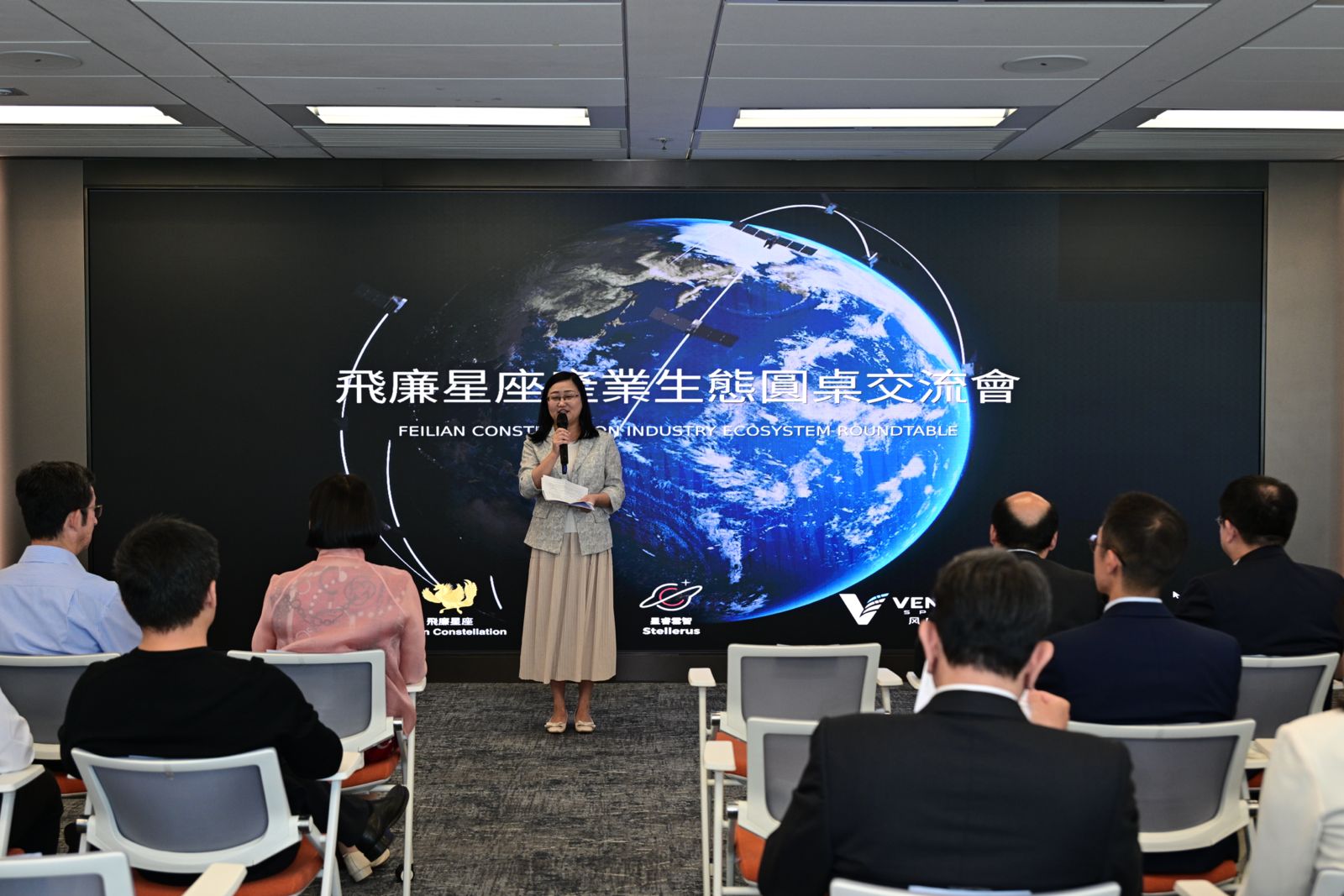
Prof. Hui Su, Project Leader of the "Feilian Constellation," Co-founder, and Chairman of AstroCloud AI, stated in her remarks that the goal of the "Feilian Constellation" is to build a global 3D atmospheric wind field observation constellation. It aims to provide wind field data with high resolution, global coverage, and hour-level revisit capability,alongside meteorological information such as water vapor and temperature, supporting weather forecasting and intelligent industry applications.
She emphasized that the construction of the "Feilian Constellation" requires the joint participation of scientific research,engineering, industry, and capital. The project has received funding from the Hong Kong SAR Government's RAISe Scheme as well as support from venture capital institutions. The team hopes to leverage Hong Kong's advantage in connecting Mainland and international markets to work hand in hand with partners to advance constellation construction and commercial applications. In the long run, the company will also explore the integration of space computing power, space new energy, and terrestrial intelligent services, becoming a connector and value-adder in the industrial ecosystem.
◆ Speech by Xubin Zhou: Promoting Joint Innovation of Payloads and Platforms to Support Constellation Engineering and Batch Development
Xubin Zhou, Chairman and Senior Researcher of Shanghai Space Aerospace Technology Co., Ltd., introduced the company's capabilities in overall satellite design, R&D and production, Assembly, Integration and Testing (AIT). He emphasized that high-precision 3D wind field observation holds significant scientific value and broad industrial application potential.
He stated that the dual-satellite collaborative observation of the "Feilian Constellation" places high demands on platform attitude control, orbit maintenance, and collaborative operation. The cooperation between the two parties represents a joint innovation of payloads and platforms centered around the mission.
Subsequent cooperation priorities include: custom-developing satellite platforms adapted to infrared payload and dynamic water vapor tracking requirements; advancing constellation engineering and batch development; conducting integrated joint simulation and ground testing of payloads and platforms; and exploring next-generation low-cost meteorological satellite platforms along with higher-precision atmospheric stratified detection solutions. He hopes to combine the aerospace industry capabilities of the Yangtze River Delta with Hong Kong's scientific research and international resources to promote the engineering and commercialization of scientific research achievements.
◆ Speech by Changxiang Yan: Leveraging Spatial Optics Engineering Advantages to Guarantee High-Precision Payload Development
Changxiang Yan, Senior Researcher at Changchun Institute of Optics, Fine Mechanics and Physics (CIOMP), Chinese Academy of Sciences, reviewed CIOMP's technical accumulation in spatial optical payloads and greenhouse gas detection, as well as the foundation of payload cooperation with the Hong Kong University of Science and Technology (HKUST).
He expressed that CIOMP will continue to leverage its strengths in optomechanical design, precision alignment,environmental verification, and space payload engineering. Focusing on lightweight design, high-stability imaging,high-precision detection, and space environment adaptation, CIOMP will provide technical support and development guarantees for the Feilian Constellation. He looks forward to all parties further strengthening collaboration in payloads, platforms, constellation networking, and data applications to promote the industrialization of scientific research cooperation achievements between Hong Kong and the Mainland.
◆ Speech by Wei Sun: Connecting Energy, Computing Power, and Meteorological Observation to Enhance Wind and Solar Forecasting Capabilities
Wei Sun, Vice Chairman of GCL Group Holdings Co., Ltd., shared GCL's layout in new energy materials,photovoltaics, energy storage, and compute-electricity synergy, as well as its exploration of space compute-electricity integrated testbed platforms.
She proposed that combining energy, computing power, and meteorological payloads can drive satellites to extend toward on-orbit sensing, computation, and decision-making, thereby enhancing the timeliness of data processing and application. Proceeding from the operational needs of new energy power plants, she particularly focuses on refined weather and power generation forecasting, looking forward to the "Feilian Constellation" providing support for power station management, power dispatching, and trading.
II. Keynote Reports
◆ Technical and Application Prospects of "Feilian Constellation"
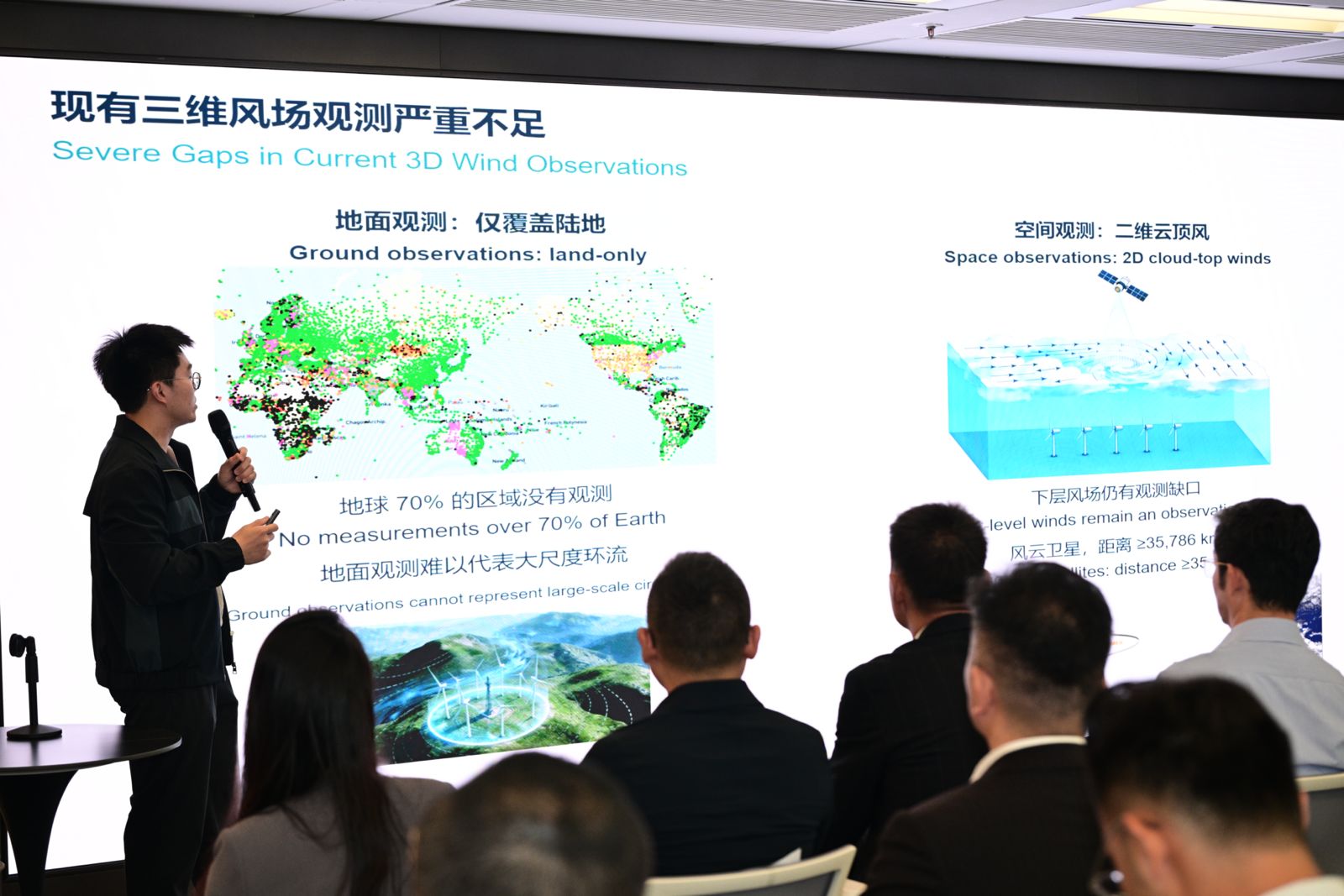
Weifan Xu, Co-founder and Chief Technology Officer of AstroCloud AI, introduced the "Feilian Constellation" from the aspects of 3D wind field observation demand, project technical foundation, constellation scheme, and future R&D directions.
1. Filling the Gap in Global 3D Wind Field Observation: Wind is a crucial variable affecting weather evolution,atmospheric circulation, pollutant transport, and greenhouse gas diffusion. Existing ground observations are unevenly distributed, and significant deficiencies remain in wind field observations over oceans and within the troposphere. Taking refined 3D wind field observation as an entry point, the "Feilian Constellation" hopes to provide new data sources for weather forecasting and industry applications.
2. Tracking Water Vapor Movement via Dual-Satellite Collaborative Observation: The constellation adopts a dual-satellite co-orbital design. Through continuous observation of water vapor features in the same area by the front and rear satellites, atmospheric motion vectors are derived using water vapor variations to obtain 3D wind fields.The project's core technologies include hyperspectral payloads, dual-satellite and constellation design and control,as well as data processing and AI algorithms. The team has conducted preliminary research using satellite data from NASA and NOAA, and accumulated development, testing, and on-orbit application experience through previous space payload missions.
3. Synchronously Advancing Algorithm Verification and Application Research: During the constellation development process, the team is utilizing similar-band data from Fengyun satellites for algorithm development and verification. Concurrently, they are advancing orbit optimization, performance analysis of wind measurement relative to inter-satellite distances, and research on integrating wind field data with weather forecast models. The report presented case studies such as 3D water vapor structure reconstruction, typhoon, and thunderstorm forecasting, demonstrating the application potential of combining satellite observations with AI models.
4. Exploring Observation-Native Meteorological AI: The team will further explore meteorological and Earth intelligence models trained directly on raw observation data. Through multi-source observation fusion, these models will serve weather forecasting and downstream tasks, while exploring integration with directions such as space computing power and space energy.
◆ Introduction of the Product System Powered by "Feilian Constellation"
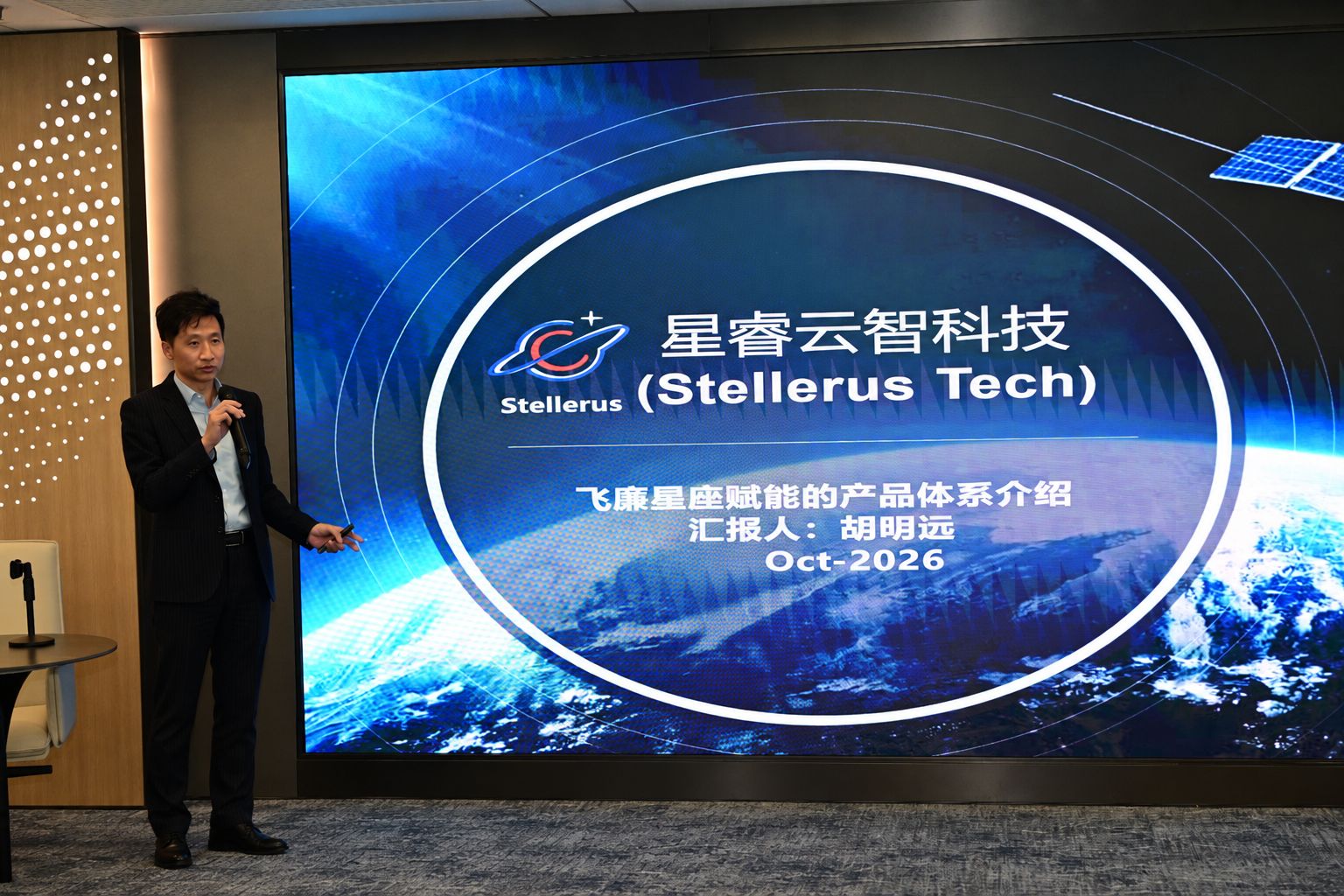
Mingyuan Hu, Chief Product Officer of AstroCloud AI, presented the company's current work and strategic layout centered around the "Data-Model-Application" product system.
1. Building a Meteorological Data and Model Foundation: The underlying layer of the product is supported by a meteorological data governance platform and a model training and simulation platform, integrating satellite,ground, and other observation data to perform quality control, data assimilation, and ensemble forecasting. Built upon this foundation are meteorological data products, industry models, operational platforms, and AI agent services. The team adopts multi-scale methods and physical constraints to deliver refined forecasts for key regions and specific scenarios, continuously supplementing high-frequency data required by industries like new energy.
2. Energy Meteorology: Targeting wind power, photovoltaic power stations, and enterprise group clients, the system provides wind-cloud dynamics forecasting, power generation forecasting, and power trading decision support.Service priorities include the impact of sudden strong winds, wind ramps, and abrupt cloud cover changes on power generation, as well as minute-level forecast support for plant operations and trading. The products cover station-side deployment and group-side SaaS services, offering customized support tailored to the observation conditions surrounding client sites. The report shared application cases demonstrating cost reduction in deviation penalties for clients.
3. Transportation Meteorology and Marine Services: In aviation, support is provided for airport runway wind conditions, tailwind/crosswind warnings, and operational dispatching, with related systems already deployed at Shanghai Hongqiao and Pudong Airports. The team is also expanding into low-altitude meteorological scenarios such as drone takeoff, landing, and delivery. In the marine domain, information on wind, waves, currents, typhoon tracks, and impact zones is provided to support offshore engineering operations, risk avoidance, and maritime navigation.
4. Disaster Warning and Climate Risk Services: Centering on landslides, urban waterlogging, and storm surges, the service chain integrates real-time observation, digital twins, physical models, and AI forecasting, spanning from disaster warning to asset risk assessment. The report highlighted case studies such as Hong Kong slopes, and urban waterlogging in Hong Kong and Jinhua, while introducing related work tailored for MTR stations,entrances, exits, and alignment facilities. Moving forward, the service will further integrate multi-hazard analysis to develop climate risk AI agents and comprehensive asset evaluation services.
III. Thematic Discussions
◆ Connecting Satellite Observations with Terrestrial Applications via Geographic Information Systems - Dr Winnie Tang: Founder and Chairman of Esri China (Hong Kong)
Dr Winnie Tang introduced the work of utilizing the Hong Kong ArcGIS platform for satellite data analysis and the collaboration with the project team regarding MUSICO observation data.
She pointed out that the application value of satellite observations lies not only in data acquisition, but also in connecting data with specific locations, ground facilities, and environmental information. GIS supports time-series analysis, change detection, 3D visualization, and spatial analysis, fusing observation data with terrain, land use,population, and infrastructure information.
In carbon monitoring, environmental analysis, and urban risk management, such fusion helps identify priority areas,supports research and monitoring, and enables the sharing of outcomes through maps, dashboards, and web applications.
◆ Refined Meteorological Services Supporting Railway Operations and Low-Altitude Logistics - Prof. Lawrence Poon: Head of Emerging Technology and Global Innovation at MTR
Prof. Lawrence Poon introduced MTR's demand for advance warnings, facility inspections, and service recovery,drawing from experiences with extreme rainstorms, typhoons, and railway operations.
He noted that more timely meteorological and environmental information can buy time for protecting stations and alignment facilities, thereby supporting personnel and resource dispatching. Combining satellite data with drones and ground sensors can also assist post-disaster inspections and accelerate operational recovery.
Regarding drone logistics, localized wind field and weather risk information helps optimize routes, improve operable window hours, and boost service efficiency, providing support for generating tangible commercial value in the low-altitude economy.
◆ Computing Power and Data Infrastructure Empowering Industrial Applications - Wei Wei: General Manager of Inspur Cloud Services Hong Kong Co., Ltd.
Wei Wei introduced Inspur Cloud's transition from cloud services toward full-stack AI technical services, as well as its capabilities in computing power scheduling, models, data production, and industry applications.
She proposed that satellites expand the scope of data acquisition, while AI and data services assist users in understanding data and forming applications. Inspur Cloud aims to provide computing power, data, and application infrastructure support for ecosystem partners.
Regarding cross-border operations, she shared practices such as trusted data spaces, inbound data processing, and free trade zone isolated environments, offering collaborative ideas for data processing and services targeted at international markets.
IV. Open Discussion
◆ Hongqing Li: General Manager of China Great Wall Industry Hong Kong Limited
Hongqing Li summarized the exchange with the words "Professionalism, Synergy, and Implementation," noting that the "Feilian Constellation" brings together partners from aerospace, meteorology, cloud computing, and industry applications, exemplifying the exploration of industrial synergy and commercial closed-loops.
He introduced Great Wall Company's comprehensive service capabilities in international commercial launches, satellite in-orbit delivery, ground systems, insurance, and financing. He stated that the company will advance the execution and follow-up services for the Feilian project and continue cooperation centered around the long-term planning of the constellation.
◆ Roger Tong: Chief Executive Officer of AsiaSat
Roger Tong stated that the "Feilian Constellation" demonstrates the specific uses of remote sensing data in domains like energy and logistics, offering a clear direction for commercial aerospace applications.
He emphasized that commercial services need to integrate data acquisition, transmission, processing, and application seamlessly across all links. AsiaSat hopes to explore data relay between low-Earth orbit (LEO) observation satellites and geostationary orbit (GEO) communication satellites to enhance remote sensing data transmission efficiency. Prof.Hui Su responded that the project team is currently discussing LEO-GEO interconnection solutions with AsiaSat to support more timely data transmission and application.
◆ Jing Su: General Manager of APT Satellite
Jing Su introduced APT Satellite's GEO communication services and international market foundation, sharing experiences in satellite operations, licensing, and frequency management in Hong Kong.
He expressed willingness to support the development of the Feilian project and the construction of Hong Kong's commercial aerospace ecosystem. Meanwhile, land, sea, and air mobile communication customers generally share demands for weather and disaster information; Feilian products have the opportunity to combine with satellite communication services to add value for existing users. APT Satellite also hopes to utilize its overseas clients and regional ecosystem to promote relevant products to international markets.
◆ Qing Chen: Chief Executive Officer of Beefly Space
Qing Chen introduced the company's goals to build a new-generation IoT constellation, reduce connection costs, and advance global operations.
He proposed that deploying low-cost meteorological terminals and ocean buoys in key regions can complement Feilian satellite observations, adding ground and ocean observation sources to the meteorological data platform. He looks forward to relying on Hong Kong's platform and the Mainland commercial aerospace supply chain to jointly develop products and services for global markets with ecosystem partners.
◆ BY Sim: General Manager of Thales Solutions and Services Hong Kong Limited
BY Sim shared perspectives on the demands for meteorology, positioning, communication, and platform synergy,drawing from low-altitude economy and autonomous operation scenarios.
He pointed out that Guangdong-Hong Kong cross-border drone operations require real-time sensing of weather changes along routes to support route adjustments and safe operations. As applications evolve, requirements for data coverage,processing speed, and service capabilities will also rise. He looks forward to strengthening exchanges through industrial platforms to explore space data applications in the low-altitude economy, smart cities, and IoT.
◆ David Choi: Technology Development Manager of Knowledge Transfer Office, HKUST
David Choi reviewed the process of supporting the "Feilian Constellation" in applying for the RAISe Scheme funding,highlighting the joint dedication of the team, university, and partners in refining proposals and preparing applications.
He stated that securing funding marks the starting point of the project, and implementation over the coming years still requires the continuous involvement of industry partners. The development of the Feilian Constellation relies on the close integration of scientific research, engineering, and industrial resources, hoping all sectors will continue to support the project's progress.
V. Supporting Institutions
◆ Leveraging Guangzhou-Hong Kong Dual-Center Advantages to Promote R&D Commercialization
Haogan Liang, Manager of Guangzhou-Hong Kong Science and Technology and Industry Integration Innovation Center, introduced that the center is jointly operated by Yuexiu Group, Hong Kong Science Park, and HKUST,connecting projects, talent, technology, and industrial resources between Guangzhou and Hong Kong.
He pointed out that the Hong Kong center focuses on frontier R&D, international resource matching, and global expansion, while the Guangzhou center focuses on achievement commercialization, industrial implementation, and large-scale production. The center hopes to combine the industrial capital, scientific research, and enterprise service capabilities of all three parties to provide technological enterprises with R&D, spatial, and investment/financing support, promoting innovative achievements into the market.
VI. Meeting Conclusion
◆ Gathering Collaborative Strength to Advance Constellation Construction and Application Implementation
In her conclusion, Prof. Hui Su thanked the university and partners for their support, emphasizing that unity and cooperation are the core of project development. She expressed hope to take this exchange as a starting point to strengthen resource sharing and complementary advantages, attracting more partners to participate in constellation construction and application development.
Centering on constellation engineering, industry applications, communication transmission, computing power, and data services, this exchange outlined multiple cooperation directions. AstroCloud AI will continue to join hands with ecosystem partners, combining Hong Kong's scientific research and international advantages, the Mainland's engineering manufacturing capabilities, and Greater Bay Area industrial resources to jointly promote the development of Hong Kong's commercial aerospace and space economy.
Event Photos